

Research on the biology and culture of shellfish
News about ongoing investigations
Mussel beds respond to storms in two ways: how well they can weather the storm and how quickly they recover after the storm is over. If clams return to normal quickly after a storm, they can limit the damage from the storm. But if the effects of the storm last long, it becomes more difficult for mussels to recover. Over the past 12 years, the Royal Netherlands Meteorological Institute (KNMI) has recorded 32 severe storms…
Zhao, Z., Capelle, JJ, de Smit, JC, Gerkema, T, van de Koppel, J, Yuan, L, Bouma, TJ, Stability of subtidal mussel beds under hydrodynamic stress: A novel approach for threshold quantification and risk assessment (in preparation for publication). Determining the critical threshold for runoff (CDT) for example by flow is very important in estimating risks to ecosystems. It helps identify vulnerable areas to make management decisions. On mussel plots, some individuals or groups may be…
Knowledge base
Mussels filter out all kinds of suspended solids (seston) from the water. The seston includes plankton, bacteria and inorganic material. Plankton is a collective term for all organisms floating freely in the water. Zooplankton is formed by animal organisms, while phytoplankton is formed by plant organisms (algae). Mussels feed primarily on phytoplankton but other particles in the water, such as dead organic matter and bacteria attached to it, microzooplankton and for larger mussels, mesozooplankton, can…
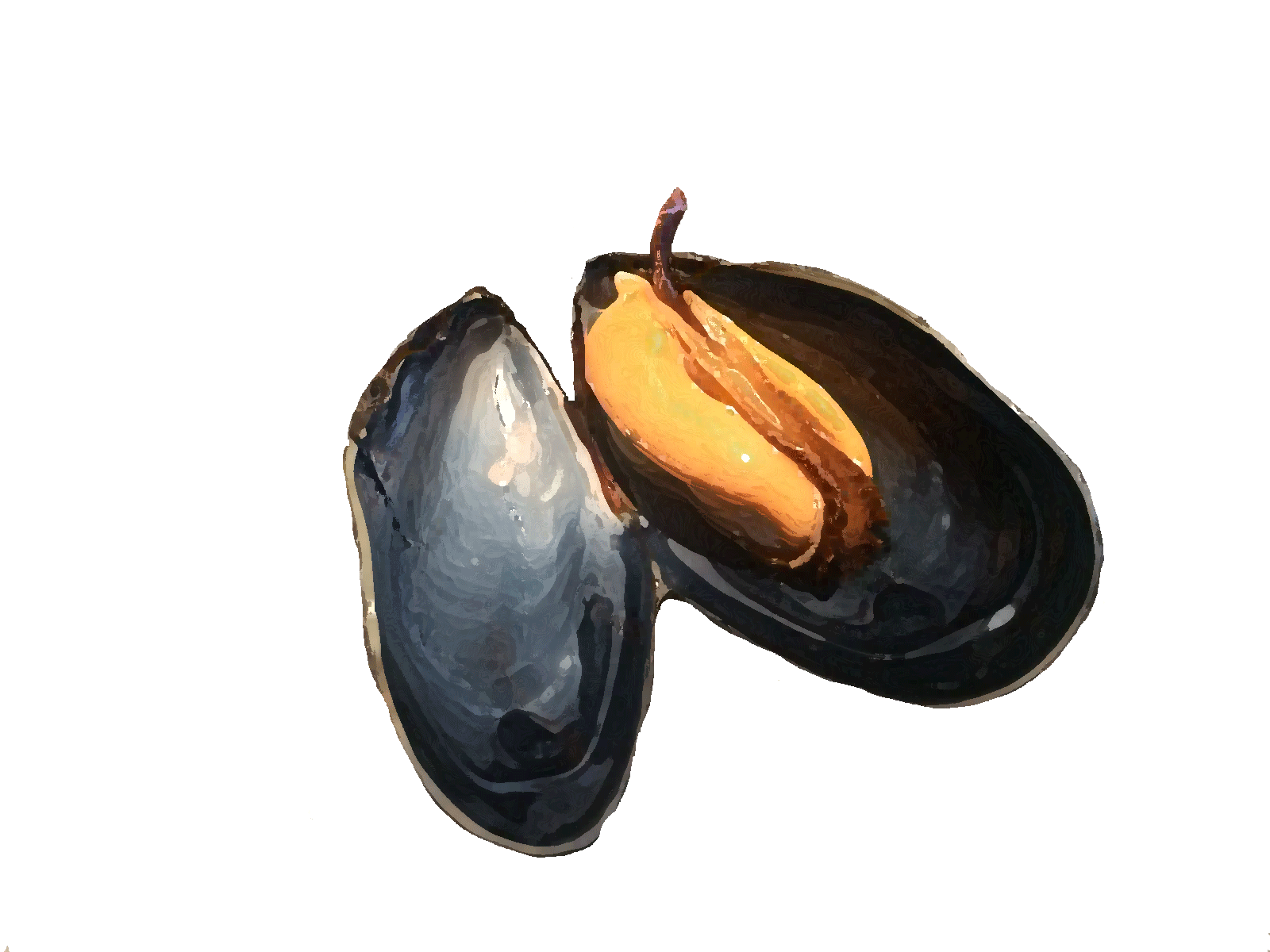
The common mussel also called the blue mussel Mytilus edulis belongs to the mollusca (mollusks), also called shellfish. Because they have a left and right shell, mussels are classified within the group of mollusks as bivalvia, the bivalves. Mussels are widespread throughout the world, including along the coasts of Europe. In Dutch waters mussels were found mainly in the Zeeland delta and in the Wadden area. Mussels can form large mussel beds with distinctive structures,…